Madagascar is safe to visit for most travellers on a standard itinerary, provided you take the same precautions you'd take in any large city with visible inequality, avoid a small number of specific regions, and prepare properly for health risks. That last point matters more here than the crime question, and it's the one most people skip.
This guide gives you what a government advisory can't: which risks are real, which are exaggerated, where the geography of risk actually sits, and what changes if you're on a guided trip rather than travelling independently.
Last verified: update this date each time you review the article. Advisory levels change. Check your own government's current guidance close to departure.
What the official advisories say right now
Start with the primary sources rather than a blog. Three are worth checking, and they don't always agree.
United States. The State Department currently places Madagascar at Level 2 — Exercise Increased Caution. That's the same tier applied to a long list of ordinary holiday destinations, including several European countries. It is not a warning against travel. Check the current text at travel.state.gov.
United Kingdom. The Foreign, Commonwealth and Development Office publishes region-specific guidance rather than a single national score, and advises against travel to certain areas only. See the FCDO Madagascar page.
Your insurer. This is the one people forget. Some policies void cover if you travel against your own government's advice for a specific region, so the advisory text has financial consequences, not just informational ones.
The political situation, stated plainly
Madagascar went through a period of political unrest in late 2025, including protests in Antananarivo and a change of government. A transitional administration followed. Tourism continued to operate throughout, and the situation since has been described by multiple governments as calm.
What this means practically:
Political demonstrations, when they occur, are concentrated in central Antananarivo and a few provincial capitals — not in national parks or along the RN7 corridor.
Gatherings can close roads or disrupt domestic flight schedules at short notice. This is a logistics risk more than a personal safety risk.
Foreign nationals have not been targets. The standard advice — avoid crowds and demonstrations, don't photograph them, don't join them — is sufficient.
Information moves slowly and unevenly. A dramatic headline from months ago will still be near the top of search results long after the situation has changed.
If you're travelling with a local operator, this is one of the concrete advantages: someone who lives in the country knows which morning to leave early and which route to swap. That knowledge doesn't exist in a blog post.
Crime: what's realistic and what isn't
The dominant risk to travellers is opportunistic theft, not violence.
Pickpocketing and bag-snatching in crowded urban areas, particularly the Analakely market district in Antananarivo and around bus stations. Phones held loosely and bags worn on one shoulder are the usual targets.
Walking after dark in Antananarivo is the single most consistently repeated warning across every advisory. Take a vehicle at night, even for short distances. This is normal local behaviour, not tourist paranoia.
Vehicle break-ins when luggage is visible. Bags go in the boot, not on the back seat, and nothing stays in the car overnight.
Isolated beach areas after dark in some coastal towns, including parts of Nosy Be and the southwest. Stay within lit, populated areas in the evening.
Banditry on remote roads in the deep south and southwest interior. This is real, it is regionally specific, and it is the main reason certain routes are travelled in daylight only or avoided entirely.
What is genuinely uncommon: violent crime against tourists on standard itineraries, kidnapping of foreign visitors, and terrorism. Madagascar has no significant recent history of the last of these.
The geography of risk
This is the part that turns a vague worry into a plan. Risk in Madagascar is not evenly distributed.
Lower-risk and standard for tourism: the entire RN7 corridor from Antananarivo to Toliara, including Antsirabe, Ambositra, Fianarantsoa, Ranomafana, Ambalavao, Isalo and Ifaty. Also Andasibe and the eastern rainforest, the far north around Diego Suarez, Nosy Be, and the Morondava area.
Regions where advisories urge extra caution or advise against travel: parts of the deep south and southwest interior, particularly remote areas of the Androy and Anosy regions, and some isolated stretches inland from Toliara. These carry banditry risk on unpatrolled roads.
The important observation: none of the higher-risk zones sit on the standard RN7 itinerary or on any of the main national park circuits. A conventional Madagascar trip does not pass through them. If a route you've been offered does, that's worth a specific question to your operator.
Health is the bigger risk, and it's the one you can control
Statistically, a traveller to Madagascar is far more likely to have their trip affected by illness than by crime. Preparation here is not optional.
Malaria. Risk exists across most of the country, year-round, and is higher in coastal and lowland areas than in the Highlands. Prophylaxis is standard advice. Consult a travel clinic six to eight weeks before departure. The CDC Madagascar travel health page is the reference starting point.
Water and food. Drink bottled or properly filtered water, including for brushing teeth. Hot, freshly cooked food is generally fine. Rice, which you'll eat constantly, is not the problem — uncooked salads washed in tap water are.
Medical facilities. Antananarivo has clinics used by expatriates. Outside the capital, facilities are limited, and serious cases are evacuated. This is why the next point isn't a formality.
Insurance with medical evacuation cover. Not travel insurance generally — evacuation cover specifically. Confirm the policy covers repatriation from a remote area, not just hospital fees.
Plague and other endemic diseases. Madagascar reports seasonal plague cases, mainly in the central Highlands, typically between roughly September and April. Cases among travellers are very rare and the disease is treatable with antibiotics when caught early. It is a reason to take standard precautions, not a reason to cancel.
Bring your own basics. A small kit with rehydration salts, antidiarrhoeals, antiseptic, plasters and any prescription medication in original packaging. Pharmacies exist but stock is inconsistent outside the capital.
Road safety, cyclones and natural hazards
The road is where the real daily risk sits, and it's rarely mentioned in safety guides.
Night driving. Avoid it. Unlit roads, unmarked vehicles, livestock and pedestrians make after-dark driving the most dangerous routine activity in the country. A well-run itinerary simply doesn't schedule night transfers.
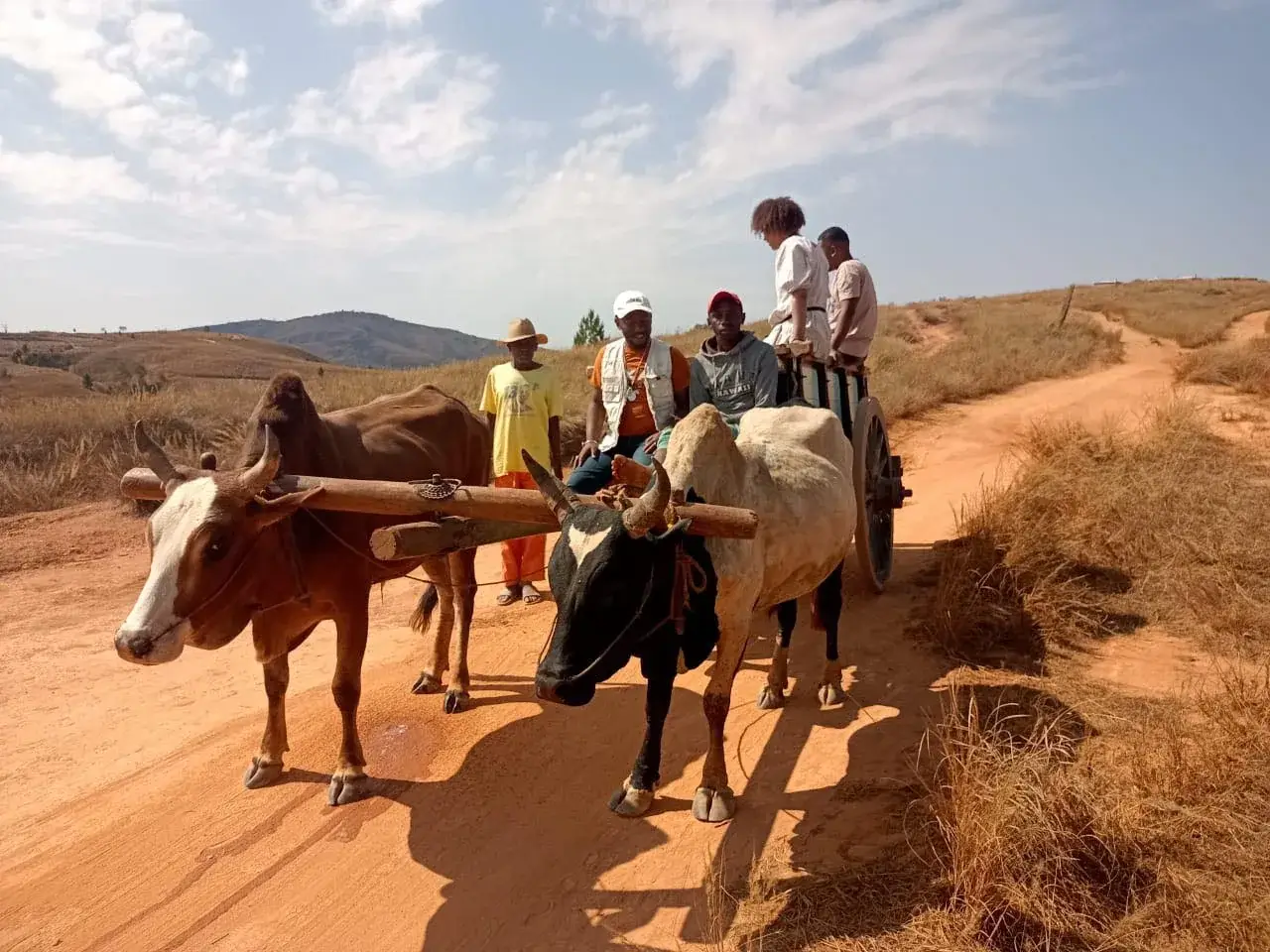
Road conditions. Potholes, single-lane bridges and unpaved sections are normal. This is an argument for an experienced driver-guide and a properly maintained 4x4 rather than a self-drive rental.
Cyclone season. Roughly November to April, affecting mainly the east and north coasts. Cyclones are forecast days in advance and the practical effect is usually a disrupted itinerary rather than personal danger. Travelling in the dry season sidesteps this entirely.
Sea conditions. Strong currents and sharks in some coastal areas. Swim where locals swim, ask before entering the water, and treat local advice as authoritative.
Is Madagascar safe for solo female travellers?
Broadly yes, with the usual qualifications. Malagasy society is generally courteous toward visitors, and harassment of foreign women is not a prominent theme in traveller reports the way it is in some destinations.
Dress modestly outside beach areas — covered shoulders and knees in towns and villages. This is normal local practice, not an imposition on visitors.
Don't walk alone after dark in urban areas. This applies to everyone, and more so to solo travellers.
A driver-guide arrangement removes most of the friction points: transport, navigation, and having someone who can intervene in a misunderstanding.
Homestays are among the safest arrangements available, since you're inside a family structure rather than in anonymous accommodation.
Practical precautions that actually work
Carry a modest amount of cash in small notes, and leave the rest in your accommodation. Ariary comes in large-denomination bundles that are conspicuous when handled in public.
Use ATMs inside banks during the day, not standalone machines at night.
Keep a photo of your passport and visa on your phone and in your email. Carry a copy; leave the original secured.
Register with your embassy if it offers a traveller registration service. It costs nothing and matters if something goes wrong.
Buy a local SIM at the airport. Coverage is better than you'd expect on main routes and it removes dependence on hotel Wi-Fi.
Agree on plans with your guide each morning, including where you're staying and when you're expected. Simple, and it means someone always knows where you are.
Don't photograph people without asking, and never photograph tombs, ceremonies or military installations. The first is courtesy; the last can cause genuine trouble.
What a guided trip changes
Most of the risks above are reduced substantially by not being alone with a map.
A driver-guide handles night arrivals, knows which roads are currently passable, knows which neighbourhoods to skip, and can read a situation in a language you don't speak. Local park guides are mandatory at most reserves anyway. Homestay hosts are vouched-for members of a community rather than strangers. And when a plan needs to change — a road closure, a weather event, a demonstration — someone with a phone full of local numbers fixes it in an hour rather than a day.
That's the practical case for travelling with a local team based in Madagascar, rather than an abstract argument about authenticity.
Frequently asked questions
Is Madagascar safe to visit right now?
Yes, for most travellers on a standard itinerary. The US advisory sits at Level 2, the same tier as many popular destinations, and the situation following the 2025 political transition has been described as calm. A small number of regions carry higher risk, and none of them sit on the main tourist routes. Always check your government's current advisory close to departure.
Which parts of Madagascar should I avoid?
Remote areas of the deep south and southwest interior, where banditry on unpatrolled roads is a genuine risk. A standard RN7 or national park itinerary does not pass through these areas.
Is Antananarivo dangerous?
It has the petty crime profile of any large capital with visible inequality. The specific rule that matters is not walking after dark — take a vehicle at night, even short distances. In daylight, with normal awareness in crowded areas, it's manageable.
Do I need malaria tablets for Madagascar?
Prophylaxis is standard advice for most of the country, and risk is higher on the coasts and lowlands than in the Highlands. Speak to a travel clinic six to eight weeks before departure — the recommendation depends on your route and your medical history.
Is Madagascar safe for solo female travellers?
Generally yes. Dress modestly outside beach areas, avoid walking alone after dark, and consider a guided arrangement, which removes most of the practical friction. Harassment of foreign women is not a prominent theme in traveller reports.
Is it safe to drink the water in Madagascar?
Drink bottled or properly filtered water, including for brushing teeth. Hot freshly cooked food is generally fine; raw salads washed in tap water are the more common cause of illness.
What about cyclones?
Cyclone season runs roughly November to April and mainly affects the east and north coasts. Storms are forecast in advance and the usual consequence is a disrupted itinerary. Travelling in the dry season avoids the question entirely.